
Forklift Maintenance & Operation Guide for Australian Businesses
Why Forklift Maintenance Starts Before You Turn the Key
Holding a forklift licence in Australia is just the beginning. What surprises many operators, and many businesses, is how quickly the pre-operational habits taught during licensing training get forgotten once day-to-day work takes over. Yet those habits are not optional extras. They are a core part of safe forklift operation and, critically, they are a legal responsibility.
In Australia, the obligation does not rest solely on the operator. It is the business’s responsibility to ensure that correct forklift maintenance and safety procedures are followed consistently, every shift, every day. That means having systems in place, not just expectations.
The Business’s Role in Forklift Maintenance
A sound forklift maintenance programme begins with organisational accountability. As a business owner or manager, it is not enough to assume your operators know what to do. You need to nominate a responsible person, a manager, supervisor, or team leader, whose role includes ensuring that pre-operational safety checks are carried out and documented before any forklift enters service.
A few foundational steps every business should have in place:
Assign clear responsibility. Nominate a specific person responsible for overseeing pre-start checks on each shift. This removes ambiguity and ensures accountability.
Establish a reporting culture. Operators must feel confident reporting damage, faults, or concerns to their employer, supervisor, manager, or employee safety representative immediately, without hesitation or fear of blame. A damaged machine that goes unreported is a serious safety risk.
Isolate faulted equipment. If an operator identifies a fault or damage requiring immediate attention, that forklift must be taken out of service and clearly isolated so it cannot be used until repairs have been completed. This is non-negotiable.
Use checklists as a standard practice. A pre-operational checklist is one of the simplest and most effective forklift maintenance tools available. It creates a documented record, builds operator awareness, and helps identify recurring issues before they become costly or dangerous problems.
Pre-Operational Forklift Checklist
Before starting the forklift, operators should methodically work through the following checks. This routine is especially important when using an unfamiliar or newly assigned machine, as it helps the operator become familiar with that specific piece of equipment.
Before Starting the Engine
Tyres
Inspect all tyres for visible wear, cuts, damage, or embedded objects. For pneumatic tyres, check that inflation pressure is within the manufacturer’s recommended range. Worn or underinflated tyres affect stability and braking significantly.
Fluids
Check engine oil, coolant, hydraulic fluid, and fuel levels. Look for any signs of leaks underneath the machine or around hose fittings. Running a forklift low on fluids can cause rapid mechanical damage and unexpected failure.
Seating
Inspect the operator’s seat for condition and security. Adjust the seat position before operation to ensure the operator can reach all controls comfortably and safely.
Warning Devices
Test the horn, reversing beeper, headlights, and flashing warning light. These devices are not just for operator safety — they protect pedestrians and other workers sharing the same space. A forklift with a non-functioning horn or reversing alarm should not enter service.
Lift Capacity Markings
Check the data plate is visible, legible, and matches the attachments currently fitted. Inspect lift chains and mast guides for signs of stretch, wear, or damage that could compromise rated capacity.
Hydraulic Cylinders and Hoses
Inspect all hydraulic hoses, fittings, and cylinders for cracks, chafing, or fluid leaks. Hydraulic failure during a lift is extremely dangerous and is often preceded by warning signs that a pre-start check would have caught.
Tynes (Forks)
Examine each tyne for cracks, excessive wear, bending, or any previous repair work. Damaged tynes are a leading cause of load instability and dropped loads. If in doubt, do not use the forklift.
Seatbelt
If the forklift is fitted with a seatbelt or operator restraint system, inspect it for damage and ensure the buckle fastens and releases correctly. Seatbelts save lives in tip-over incidents and must always be worn.
Guarding
Confirm that the overhead guard, load backrest extension, and any other guards or protective panels are properly fitted and undamaged. These components protect the operator from falling objects and should never be removed or bypassed.
Once the Forklift is Started
Pedals and Controls – With the forklift running, test all foot pedals and hand controls — acceleration, inching, mast tilt, side shift (if fitted), and any auxiliary hydraulics. Controls should respond smoothly and predictably with no stiffness, delay, or unexpected movement.
Brakes – Test both the service brake and the parking brake. The service brake should bring the forklift to a controlled, even stop. The parking brake must hold the machine stationary on a level surface without creeping. Any sponginess, pulling to one side, or reduced effectiveness must be reported immediately.
Developing Your Own Forklift Maintenance Checklist
The checklist above is a solid foundation, but it is not the final word. Every workplace is different. A forklift operating in a cold storage facility has different demands than one working on an outdoor timber yard or inside a food processing plant. Your forklift maintenance checklist should reflect the actual environment, the attachments used, and the specific risks present at your site.
Consider adding checks for:
- Attachment condition and securing pins (for non-standard attachments such as clamps, booms, or rotators)
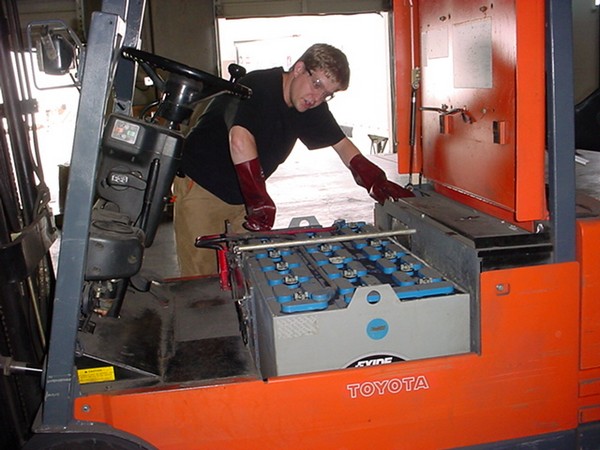
- Battery charge level and electrolyte condition (for electric forklifts)
- LPG cylinder security and hose connections (for gas-powered machines)
- Floor surface conditions and overhead clearances for the shift ahead
- Any known issues carried over from the previous shift
Review and update your checklist regularly, particularly after incidents, near misses, equipment changes, or when new operators join the team.
Scheduled Forklift Maintenance: Beyond the Pre-Start Check
Pre-operational checks are just one layer of an effective forklift maintenance programme. Scheduled servicing by a qualified technician should run alongside daily checks and is essential for identifying issues that an operator-level inspection will not catch — internal wear, calibration drift, electrical faults, or structural fatigue.
As a general guide:
- Every 250 hours or quarterly — minor service including oil and filter changes, chain lubrication, and safety system checks
- Every 500 hours or bi-annually — intermediate service covering hydraulics, brakes, steering, and mast components
- Every 1,000 hours or annually — comprehensive service and safety inspection, including load testing where required
Always follow the manufacturer’s service schedule for your specific model, and keep a complete service record. This documentation matters for insurance, compliance, and resale value.
Stay Compliant, Stay Safe
Forklift maintenance is not just about keeping equipment running, it is about protecting your operators, your other workers, and your business. Workplace incidents involving forklifts are among the most serious in Australian industry, and the majority are preventable.
If you are unsure whether your current maintenance procedures are adequate, or if you need guidance tailored to your specific equipment and operating environment, reach out to your local forklift dealer.
They can assist with service schedules, operator training recommendations, and site-specific checklist development. A well-maintained forklift is a productive forklift. Build the habit, document the checks, and make forklift maintenance a non-negotiable part of how your business operates.