
How to Put Internal Combustion Engine (ICE) Forklifts Into Storage — The Complete Guide
Whether your fleet is standing down for a seasonal slowdown, a site shutdown, or a prolonged low-demand period, how you store your internal combustion engine (ICE) forklifts matters enormously. Experience across the industry has shown time and again that complications, some of them costly arise directly from improper handling of forklifts during storage.
The good news is that with the right routine, you can keep your ICE forklifts in excellent condition and ready to return to work at a moment’s notice.
This guide covers everything you need to know, step by step.
Why Proper Storage Matters
Leaving an ICE forklift sitting idle without following a proper storage procedure is one of the fastest ways to turn a minor downtime into a major repair bill. The three main areas of concern are:
- The engine — Moisture and condensation build up inside an engine that sits idle, accelerating internal corrosion and degrading lubrication.
- Hydraulic components — Seals dry out when cylinders are not cycled, leading to leaks and seal failure when the machine is eventually returned to service.
- The battery — A neglected battery will self-discharge and sulfate, often to the point of being unrecoverable.
The single most effective way to protect an ICE forklift during storage is simple: run it briefly, every month, without fail.
Before You Begin — Choosing the Right Storage Location
Before moving any forklift into storage, selecting the right location is essential. A poor environment will work against every other precaution you take.
Your storage area must be:
- Clean — Free from dirt, debris, and grime that can work its way into seals and components over time.
- Dry — Moisture is the enemy of idle machinery. Humidity accelerates corrosion on metal surfaces, electrical contacts, and internal engine components.
- Free from airborne contaminants — Dust, chemical vapours, paint particles, and other airborne matter can foul fuel systems, filters, and sensitive components during extended storage.
An indoor, covered facility is strongly preferred. Outdoor storage, even under a cover, exposes equipment to temperature cycling and moisture ingress that no storage routine can fully compensate for.
Step 1 — Remove and Tag the Forks
Before parking the forklift for storage, remove the forks.
This serves two purposes. First, it eliminates a significant safety hazard — exposed fork tines in a storage area are a serious injury risk to anyone moving through the space. Second, removing forks frees up usable floor area in your storage facility.
Once removed, tag every set of forks clearly with the serial number of the truck they came from. Forks are matched to specific trucks and must be returned to the correct machine. Mixing forks between trucks can create dangerous load-handling mismatches.
Store forks flat on the floor or on a dedicated fork rack, away from pedestrian traffic areas.
Step 2 — Run the Engine to Full Operating Temperature (Monthly)
This is the most important step in your entire storage routine.
Every month, start each ICE forklift and run it at approximately 700 RPM until it reaches normal operating temperature. Do not rush this — let the engine warm up fully.
Running the engine to operating temperature achieves two critical things:
- It coats internal engine components with a fresh film of oil, protecting metal surfaces from corrosion and dry starts.
- It burns off built-up condensation inside the engine, removing moisture that would otherwise accelerate internal rusting and contaminate the oil.
⚠ CAUTION: Never shut the engine down before it reaches full operating temperature. Stopping a cold or partially warmed engine traps moisture inside and provides no protective oil coating. Engine damage can and does occur as a result. Always allow the engine to reach full operating temperature before switching off.
Step 3 — Conduct a Monthly Visual Inspection
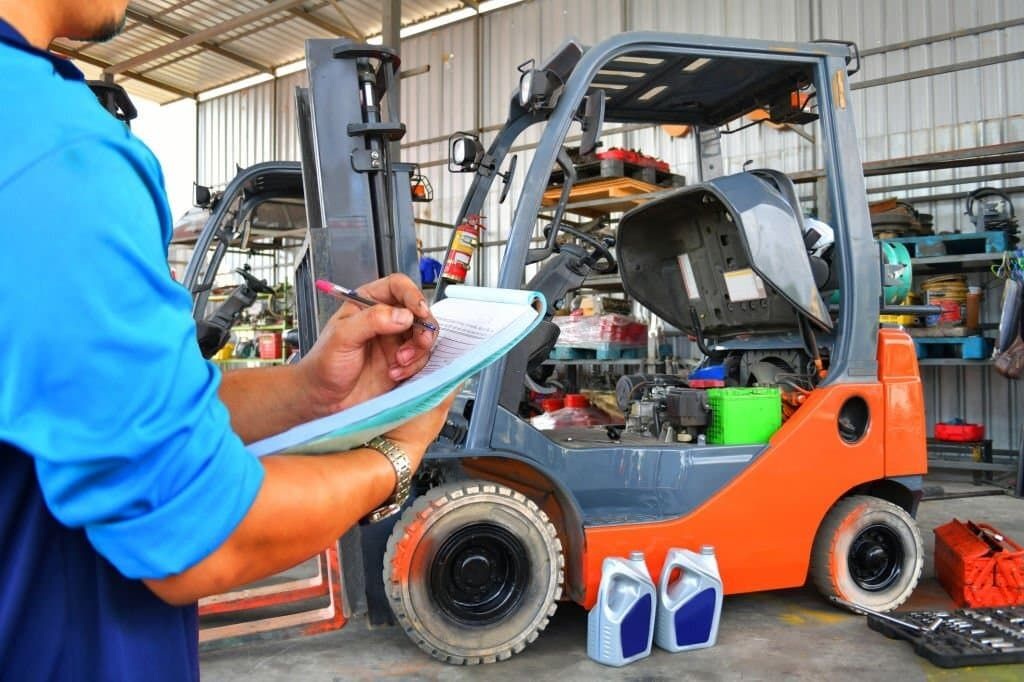
Before you run the engine each month, walk around the forklift and carry out a thorough visual inspection. Look for:
- Fluid leaks — Check under and around the machine for any pooling or staining from engine oil, hydraulic fluid, coolant, or brake fluid.
- Signs of deterioration — Look for cracked hoses, fraying cables, rust formation, corrosion on terminals, or any visible damage that has developed since the last inspection.
If you find anything, take corrective action immediately. A small leak or a cracked hose left unattended in storage will become a larger and more expensive problem by the time the machine is needed.
While conducting your inspection, check and top up fluid levels in the following:
- Radiator / coolant reservoir — Ensure the coolant level is correct and the fluid is in good condition.
- Hydraulic tank — Check the level and look for any discolouration or contamination in the fluid.
- Brake master cylinder — Confirm the brake fluid level is within the normal operating range.
Step 4 — Cycle All Hydraulic Cylinders
Hydraulic seals are designed to work. When a cylinder sits in the same position for weeks or months, the seals can dry out and harden, losing their ability to retain pressure and keep fluid in. This leads to leaks and seal failure when the machine eventually goes back into service.
To prevent this, every month you must cycle all hydraulic cylinders through their full range of motion.
Actuate each cylinder in both directions, all the way to the stops. This means:
- Raise and lower the mast fully.
- Tilt the mast fully forward and fully backward.
- Operate any side-shift, attachment, or auxiliary hydraulic functions through their complete range.
Cycling the cylinders keeps the seals active, lubricated, and supple, and coats the interior walls of the cylinders with a fresh film of hydraulic oil.
Step 5 — Park the Mast Correctly
How you position the mast when the forklift is parked for storage directly affects the condition of the tilt cylinder rods.
Always park with the mast tilted fully backward — that is, with the tilt cylinders retracted. This keeps the cylinder rods tucked inside the cylinder body, protecting them from exposure to moisture and contaminants in the storage environment.
⚠ CAUTION: The mast must be stored in the fully lowered position at all times. Storing with the mast raised exposes the lift cylinder rods, leaving them vulnerable to moisture, corrosion, and surface damage. A damaged or corroded rod will destroy its seals the moment the cylinder is operated under load.
Step 6 — Coat Exposed Cylinder Rods
Even with the mast lowered and tilted back, some portion of cylinder rods may remain exposed to the atmosphere. These exposed sections must be protected.
Using a clean cloth, apply a coating of fresh, high-grade SAE 30 or SAE 40 weight engine oil to any exposed portion of all cylinder rods. This creates a protective film that resists moisture and prevents surface oxidation forming on the polished rod surface.
Reapply this coating each month as part of your storage routine.
Step 7 — Relieve Hydraulic Pressure Before Shutdown
Once the engine has been run, the cylinders have been cycled, and the mast is correctly positioned, there is one more hydraulic step to complete before powering down.
With the engine off, actuate each hydraulic control handle in turn to relieve any residual pressure remaining in the hydraulic system. Work through each function — lift, tilt, and any auxiliary controls — moving each handle through its full range of motion.
This removes stored pressure from the system, which reduces long-term stress on hoses, seals, and valves during the idle period.
Step 8 — Wheel the Forklift and Secure It Correctly
When parking the forklift for its storage period, do not rely on the handbrake to hold the machine.
Handbrakes left applied for extended periods can seize, with the brake components bonding together under sustained pressure. This can result in a brake that is stuck on when the machine is brought back into service — a significant problem.
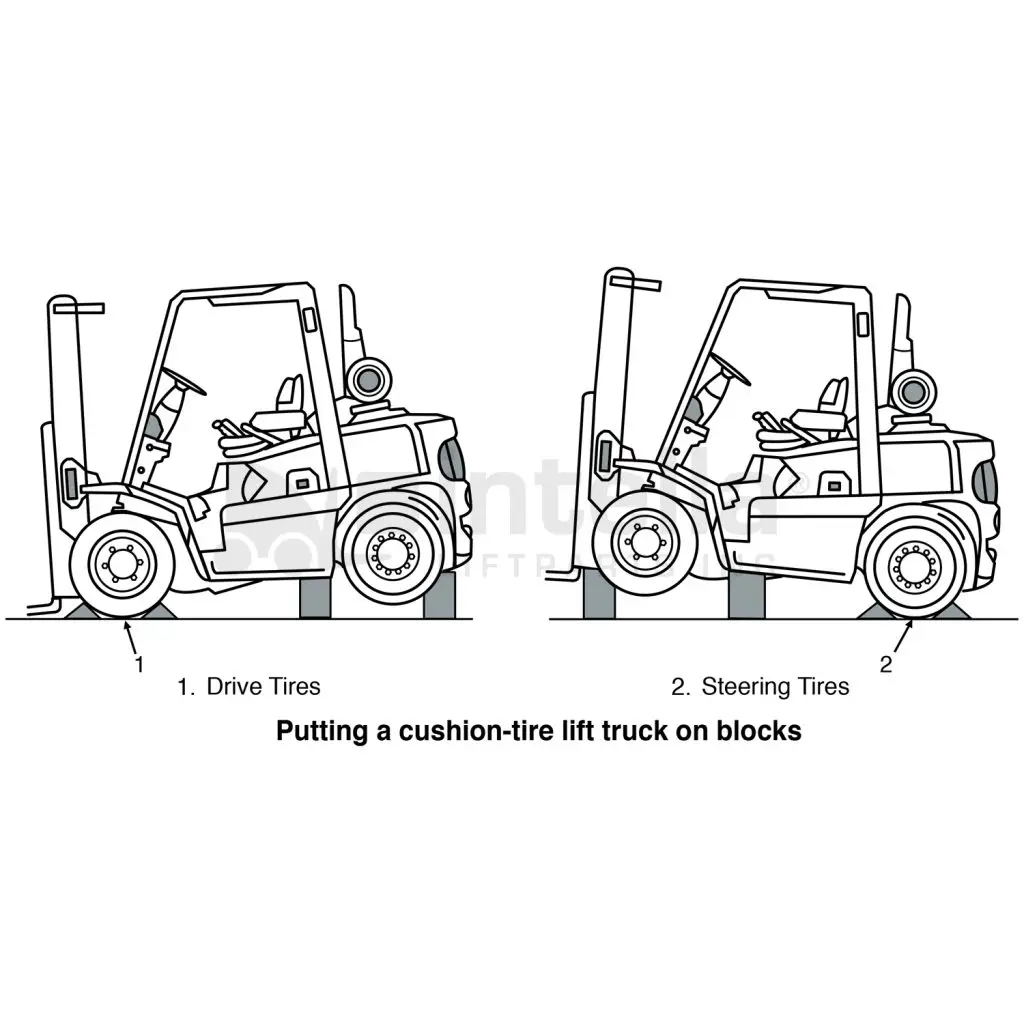
Instead, install solid wheel chocks front and rear at the drive wheels. Chocks provide secure, reliable restraint without placing any stress on the brake mechanism.
Leave the handbrake off.
Monthly Storage Checklist — Quick Reference
Use this checklist each month for every ICE forklift in storage:
- Conduct visual inspection — check for leaks and deterioration
- Check radiator coolant level
- Check hydraulic fluid level
- Check brake master cylinder fluid level
- Start engine and run at 700 RPM to full operating temperature
- Allow engine to reach full operating temperature before shutting down
- Cycle all hydraulic cylinders fully in both directions
- Park with mast lowered and tilted fully backward
- Actuate all control handles with engine off to relieve hydraulic pressure
- Apply SAE 30 or 40 oil to all exposed cylinder rods
- Chock drive wheels front and rear — do not apply the handbrake
Returning a Stored Forklift to Service
When it is time to bring a stored forklift back into active use, do not simply start it up and put it straight to work. Follow these steps first:
- Complete a full per-operational inspection as you would for any machine returning from a service or repair.
- Check all fluid levels before starting.
- Start the engine and allow it to reach full operating temperature before applying any load.
- Test all functions — lift, tilt, steering, and brakes — at low speed before returning to normal operations.
- Remove the wheel chocks only once the operator is seated and ready to move the machine.
Whether you need advice on fleet storage management, planned maintenance schedules, or sourcing the right equipment for your operation. Talk to your local forklift dealer.