
The Rise of Baoli Forklifts in the Australian Market
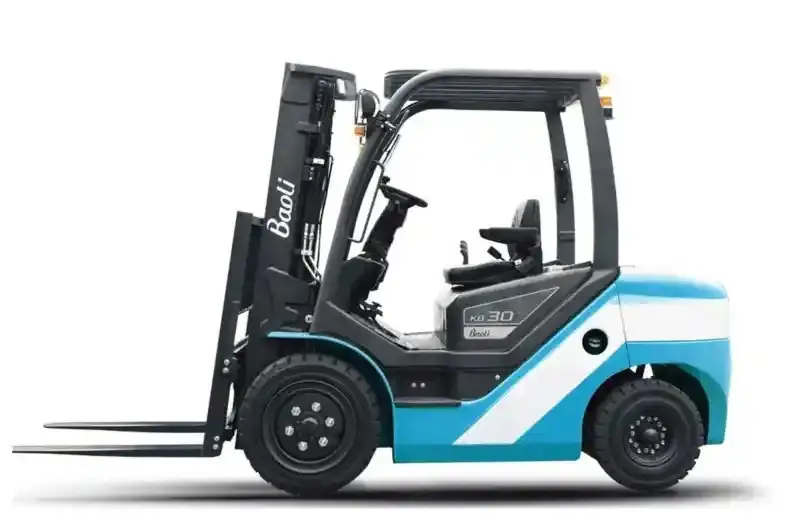
We’ve covered this topic more than once. The steady rise of Chinese-manufactured forklifts in the Australian materials handling market. What was once seen as a low-cost, fringe segment has now become a serious and permanent part of the industry landscape. Baoli forklifts are part of that story.
It’s no longer just established Chinese manufacturers like Hangcha or SANY making inroads. Baoli Forklifts have firmly entered the conversation and are now a recognized option for Australian buyers looking for value-driven equipment.
What’s changed in recent years is not just the presence of Chinese brands, but the strategy of global manufacturers themselves. Major European players such as Jungheinrich and Linde have increasingly shifted production to China, either partially or entirely, to stay competitive on cost while maintaining global supply.
Baoli Forklifts and the KION Strategy
Linde, in particular, has taken a very deliberate approach. As part of the KION Group, Linde has introduced, Baoli Forklifts into markets like Australia to target the lower-utilisation, budget-conscious segment.
Rather than diluting the premium Linde brand, Baoli operates as a separate, clearly positioned product line. It allows Linde dealers to offer a more affordable forklift option without compromising their high-end hydrostatic range.
In Australia, Baoli Forklifts are distributed through Linde’s national branch and dealer network, which gives them a significant advantage over many other Chinese imports when it comes to support, parts availability, and service coverage.
Baoli Forklift Range and Specifications
The Baoli Forklifts range is broad and continues to expand. It currently includes:
- Capacity range from 1.8 tonne through to 10 tonne, with larger units now extending up to 32 tonne
- Multiple mast configurations and attachment options
- Diesel and LPG variants to suit different applications
Engine configurations across the range include:
1.8T–3.5t Forklifts
- Isuzu C240 Diesel
- GCT K21/K25 LPG (Nissan-based engines)
4T–5T Forklifts
- Yanmar diesel engines
7T forklift range
- Mitsubishi S6S diesel engine
8T–10T and above
- Isuzu diesel engines
From a drivetrain perspective, Baoli Forklifts are conventional torque converter machines. This is a key distinction—they are fundamentally different from Linde’s premium hydrostatic transmission forklifts, which are known for precision control and efficiency.
Build Quality and Manufacturing Standard
The build standard of Baoli Forklifts is consistent with modern Chinese manufacturing. Over the past decade, Chinese production quality has improved significantly, and Baoli reflects that shift.
That said, these forklifts are designed to meet a price point. They are practical, functional machines rather than premium, high-spec units. Buyers should understand that while they carry the backing of a global group, they are not engineered to the same level as top-tier European models.

Support and After-Sales in Australia
One of the strongest selling points for Baoli Forklifts is their support structure. Unlike many independent imports, Baoli benefits from Linde’s established dealer network across Australia.
This means:
- Access to trained technicians
- Reliable parts supply
- National service coverage
For many buyers, this reduces the perceived risk often associated with Chinese-manufactured forklifts.
How Long Have Baoli Forklifts Been Around?
Baoli Forklifts have been manufactured since 2003, with the brand becoming part of the KION Group in 2009.
While the brand itself has over two decades of history, its presence in the Australian market is still relatively recent compared to some competitors. Other Chinese brands, such as EP Equipment, have had a longer and more established footprint locally.
Pricing: Where Do Baoli Forklifts Sit?
Price is where Baoli Forklifts generate the most discussion.
On paper, they sit in the budget to mid-range segment, competing directly with other Chinese imports. However, in practice, Baoli units are often priced toward the upper end of that category.
This pricing reflects:
- The Linde/KION distribution model
- Dealer support infrastructure
- Brand positioning within the network
As a result, buyers may find that similarly specified forklifts from other Chinese brands come in at a lower price point.
Final Thoughts: Are Baoli Forklifts Worth It?
There is no question that Chinese-manufactured forklifts now play a critical role in the Australian market. Baoli Forklifts are a clear example of how global manufacturers are adapting to meet demand for lower-cost equipment.
They offer:
- A wide and practical product range
- Proven engine options
- Strong national support through Linde
However, buyers should still compare carefully. For example:
An EP CPQD25N and a Baoli CPQD25 may both run the same GCT K25 engine – Yet pricing between the two can differ significantly.
Ultimately, Baoli Forklifts make the most sense for businesses that want the reassurance of a major dealer network, while still operating within a budget-conscious segment.
The key takeaway?
They absolutely have a place—but like any equipment purchase, it pays to compare specifications, pricing, and long-term value before making a decision.
