
Forklift Capacity in Australia: Complete Guide to Rated Load, SWL & WLL
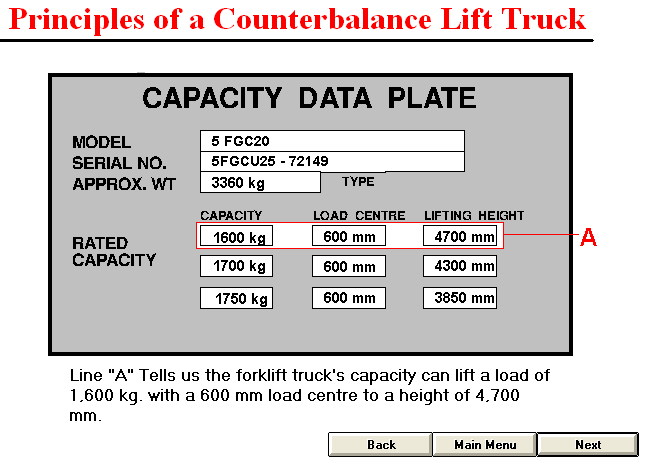
If you’re buying, selling, or operating a forklift in Australia, understanding the forklift capacity isn’t optional. Its critical for safety, compliance, and performance.
In this guide, we break down everything you need to know about rated capacity, Safe Working Load (SWL), and Working Load Limit (WLL), and how they apply across different forklift types.
What Is a Forklift Rated Capacity?
A forklift’s rated capacity is the maximum weight it can safely lift and carry under specific conditions.
You’ll commonly see it referred to as:
- Safe Working Load (SWL)
- Working Load Limit (WLL)
In Australia, these forklift ratings must comply with standards such as AS 2359.
What Affects Forklift Capacity?
Here’s where many people get it wrong, capacity is not just one fixed number.
It changes depending on:
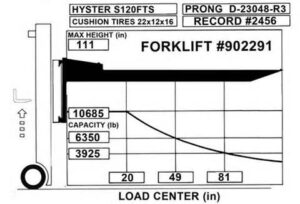
- Load centre distance (how far the load sits from the forks)
- Lift height
- Mast position (tilt/vertical)
- Ground conditions
- Attachments (jibs, slippers, cages, clamps)
⚠️ Even a small change — like adding fork extensions — can significantly reduce lifting capacity.
Forklift Capacity by Type
Different forklifts are rated differently depending on how they operate.
Counterbalanced Forklifts (Most Common)
These are the standard forklifts used across warehouses and yards.
Rated capacity is:
The maximum load (kg) the forklift can safely lift, transport, and stack on a hard, level surface, with:
- Mast vertical
- At maximum lift height
- Using a specified load centre distance
Reach Trucks & Straddle Trucks
Used in high-racking warehouse environments.
Rated capacity is:
The maximum load (kg) the machine can transport and stack on a level surface, with:
- Mast vertical
- Maximum lift height
- Defined load centre distances
Side Loaders, Turret Trucks & Order Pickers
Includes specialised equipment like:
- Four-direction forklifts
- Single-side loaders
- Turret trucks
- High-lift order pickers
Rated capacity is:
The maximum load (kg) the truck can handle, with:
- Lateral levelling systems engaged
- Mast vertical
- Maximum lift height
- Load centre defined under AS 2359.3
Pallet Jacks & Low-Lift Trucks
These are designed for transport only (not stacking).
Rated capacity is:
The maximum load (kg) the unit can safely move on a hard, level surface
Rough Terrain Forklifts
Used on construction sites and uneven ground.
Rated capacity is:
The maximum load (kg) the forklift can support and stack on rough terrain, with:
- Mast vertical
- Maximum lift height
Load centres typically are:
- 500 mm or 600 mm for fork-supported loads
- Manufacturer-specified distances for attachments
Attachments Reduce Forklift Capacity
This is one of the biggest safety risks in the industry.
Common attachments include:
- Work cages
- Fork extensions (slippers)
- Jibs and hooks
- Bale clamps
👉 Adding any attachment changes the load centre and weight distribution.
What You MUST Do:
- Have the forklift re-rated by the Original Equipment Manufacturer (OEM) or a qualified engineer
Failing to do this can:
- Make the forklift non-compliant
- Increase risk of tipping or having and accident
- Lead to fines or insurance issues
How to Check a Forklift’s Capacity (Before You Buy or Use)
Before operating or purchasing a forklift, always:
- Check the data plate (capacity plate)
- Confirm the load centre rating
- Review any attachments listed
- Ensure it complies with Australian Standards (AS 2359)
- Match the capacity to your actual application
Why Forklift Capacity Matters
Ignoring capacity limits can lead to:
- Workplace accidents
- Equipment damage
- Legal and compliance issues
Simply put: If you exceed the rated capacity, you’re operating unsafely — period.
Key Takeaway
Forklift capacity is a controlled safety limit, not a guideline.
Always operate within rated limits, understand how your machine is configured, and ensure compliance with Australian standards.
Looking to Buy or Sell a Forklift?
At ForkliftMarket.com.au, you can:
- Browse forklifts by capacity, type, and location
- Connect with dealers and private sellers across Australia
- List your forklift with detailed specs to attract serious buyers
